



Lace Wig Care 101: How to Apply and Remove Without Damaging Your Edges


Lace Wig Care 101: How to Apply and Remove Without Damaging Your Edges

A good lace wig can completely change your look but a badly applied or removed one can quietly damage the one thing you can’t easily replace: your edges. Thinning edges from tension, harsh adhesive removal, or leaving a wig on too long is one of the most common (and most preventable) hair issues wig wearers deal with.
The good news is that with the right technique and a bit of patience, you can enjoy wigs regularly without sacrificing your natural hairline.
Why Edges Get Damaged in the First Place
Most edge damage doesn’t come from wearing wigs occasionally it comes from a few specific habits:
- Applying wigs too tight, especially with elastic bands or excessive gel, which creates constant tension (traction alopecia) on already-fine hairline hairs.
- Ripping off adhesive or tape too quickly, pulling out baby hairs along with the wig band.
- Leaving wigs on for extended periods (weeks)without giving edges a break to breathe and recover.
- Skipping a proper protective base underneath the wig, so the wig cap or band sits directly against fragile hair.
Understanding this is the first step the rest comes down to application and removal technique.
How to Apply a Lace Wig Without Damaging Your Edges
- Start with a proper protective style underneath :braid or lay your natural hair down flat with a lightweight edge control, avoiding heavy gels that require tugging to remove later.
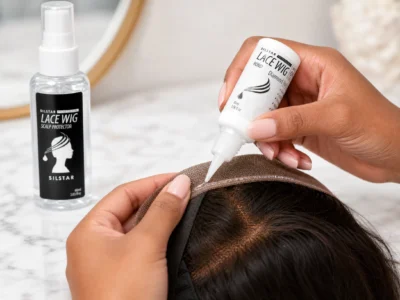
- Use a wig cap or thin protective barrier : this reduces direct friction between the lace band and your hairline. A scalp barrier spray, like the Lacewig Protector (KShs 1,100), goes a step further by shielding your scalp from adhesive irritation while still keeping the wig secure and comfortable.
- Avoid over-tightening elastic bands :snug is enough; if you can see visible pulling or feel tension at your hairline, it’s too tight.
- If using adhesive, apply a thin, even layer :a strong-hold adhesive like Lacewig Glue Gold (KShs 1,400) or Lacewig Bond (KShs 1,100) gives a long-lasting, natural-looking hold — but a thin layer is still key, since thick adhesive is harder to remove later and more likely to pull on edges during removal.
- Let adhesive set properly before pressing the wig down :pressing too early can cause uneven bonding, which often leads to more aggressive removal down the line.
How to Remove a Lace Wig Without Pulling Your Edges
- Never rip the wig off :always use a proper adhesive remover or oil-based solution to loosen the bond first. A gentle option like Lacewig Remover (KShs 1,100) is designed specifically to safely dissolve wig adhesive, making removal painless rather than a tug-of-war with your edges.
- Work in small sections :gently lift and loosen a small area at a time rather than pulling the whole band at once.
- Be patient with stubborn spots :reapply remover and wait rather than tugging harder.
- Cleanse your hairline after removal :residual adhesive left on skin can clog follicles and contribute to breakage over time.
- Give your edges a rest :if you wear wigs frequently, try to give your natural hairline at least a short adhesive-free break between applications to recover.
Keeping Your Hair Healthy Underneath
Wig care isn’t just about the wig itself protecting the hair underneath matters just as much:
- Keep your natural hair moisturized even while it’s under a wig; dryness underneath contributes to breakage.
- Avoid leaving braids or cornrows in for too long, as prolonged tension underneath a wig compounds the strain already coming from the wig band.
- Massage your scalp and edges periodically with a lightweight oil to support circulation and encourage regrowth if any thinning has already started.

Frequently Asked Questions
How do I apply a lace wig without damaging my edges?
Use a light protective base underneath, avoid over-tight elastic bands, apply adhesive in a thin even layer, and let it set properly before pressing the wig down tension and thick, rushed adhesive application are the two biggest causes of damage.
How do you remove a lace wig without losing edges?
Always dissolve the adhesive bond first with a proper remover rather than pulling the wig off, and work in small sections patiently rather than tugging at stubborn spots.
Can wearing wigs regularly cause permanent edge damage?
It can, but usually only with repeated tension, harsh removal, or no recovery breaks between applications. With proper technique and occasional adhesive-free breaks, regular wig wear doesn’t have to cause lasting damage.
The Bottom Line
Lace wigs don’t have to come at the cost of your edges. Careful application, patient removal, and giving your natural hairline room to recover are all it takes to enjoy wigs long-term without the damage that gives them a bad reputation.