



Damaged Skin Barrier? Gentle Korean Exfoliation with LHA & PHA Explained

Damaged Skin Barrier? Gentle Korean Exfoliation with LHA & PHA Explained

If your skin has been feeling tight, flaky, red, or unusually reactive lately even to products you’ve used for years without issue there’s a good chance your skin barrier is compromised. It’s one of the most common (and most misunderstood) skin issues, and the instinct to “fix” it by scrubbing harder or exfoliating more often usually makes things worse.
This is exactly where Korean skincare’s gentler approach to exfoliation, using ingredients like LHA and PHA, becomes useful especially if your regular exfoliant has started to feel too harsh.
What Is a Damaged Skin Barrier?
Your skin barrier is the outermost layer that locks in moisture and keeps out irritants, bacteria, and environmental stress. When it’s damaged from over-exfoliating, harsh actives, sun exposure, or even Nairobi’s dry heat and dust it becomes weaker at holding moisture in and keeping irritants out. The result: tightness, flaking, redness, breakouts, and skin that reacts badly to products it used to tolerate fine.
The instinctive fix exfoliating harder to “remove the damage” is usually the wrong move. What a damaged barrier actually needs is gentler, not stronger, exfoliation.
What Are LHA and PHA, and Why Are They Gentler?
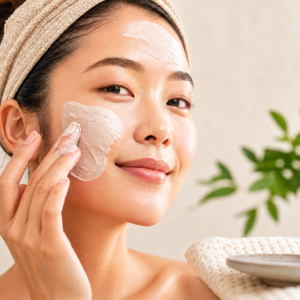
LHA (lipohydroxyacid) and PHA (polyhydroxy acid) are both chemical exfoliants, but they work differently from stronger acids like glycolic acid or traditional salicylic acid:
- Larger molecule size PHA molecules in particular are larger than typical AHAs, so they penetrate skin more slowly and gently, reducing the irritation and micro-tears that come with faster-acting acids.
- LHA works more selectively :it targets the surface layer of skin more precisely, making it effective for smoothing texture and unclogging pores without over-stripping deeper layers.
- Hydrating side effect :PHAs in particular have a humectant quality, meaning they can actually help draw in moisture while exfoliating, rather than leaving skin dry and tight the way many traditional exfoliants do.
- Lower irritation risk :this combination makes LHA and PHA suitable for compromised, sensitive, or barrier-damaged skin that can’t tolerate stronger exfoliating acids right now.
In short: they give you the benefits of exfoliation (smoother texture, clearer pores, better product absorption) without the trade-off of further weakening an already-stressed barrier.
How to Reintroduce Exfoliation Safely
- Pause strong actives first :if your barrier is visibly compromised (redness, flaking, stinging), stop retinoids, AHAs, and physical scrubs completely for at least a week or two.
- Start low and slow :introduce an LHA/PHA product just 1–2 times a week, not daily, even if the label suggests more frequent use.
- Pair with barrier-repair ingredients :look for a routine that also includes ceramides, panthenol, or centella asiatica alongside the exfoliant to actively rebuild the barrier while you gently exfoliate.
- Watch for improvement, not perfection :a healing barrier typically shows less redness and tightness within 2–4 weeks of a gentler routine; if things get worse, stop and simplify further.
- Always follow with SPF :a damaged barrier is more vulnerable to UV damage, so sunscreen is non-negotiable during this period.
A Gentle Exfoliant Worth Trying
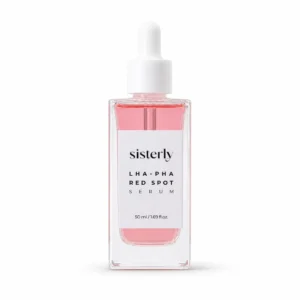
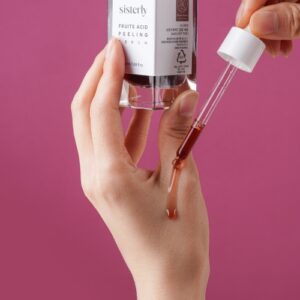
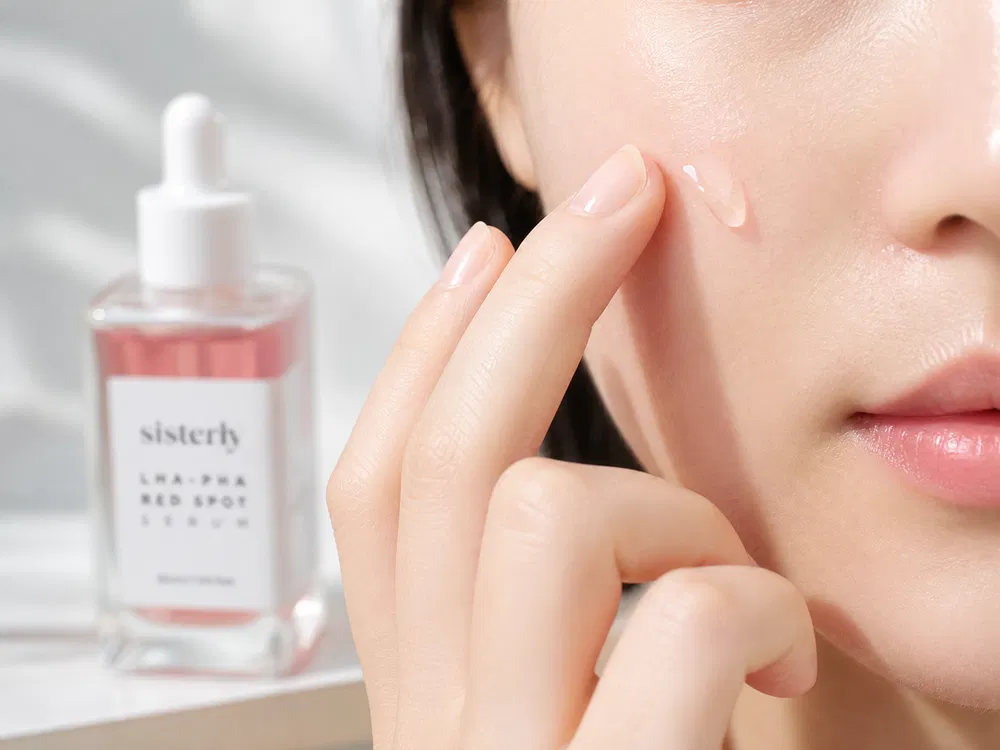
If you’re looking to start reintroducing exfoliation safely, the Sisterly LHA PHA Red Spot Serum 50ml (KShs 3,000) is built around exactly this approach. It combines LHA and PHA with an Angelica complex to gently remove dead skin cells while soothing redness and irritation leaving skin clear and moisturized rather than tight or stripped.
The Angelica complex is worth calling out specifically: it’s a calming, redness-soothing ingredient, which pairs naturally with the gentler exfoliation LHA and PHA provide. That combination exfoliate gently, soothe simultaneously is exactly what a compromised barrier needs rather than a single-purpose acid alone.
Available now at our Garden City Mall store or online.
Frequently Asked Questions
What is the difference between LHA and PHA exfoliants?
LHA works more selectively on the skin’s surface to smooth texture and clear pores, while PHA has larger molecules that exfoliate more slowly and gently, often with an added hydrating benefit both are considered gentler alternatives to traditional AHAs and BHAs.
Can you use LHA or PHA on sensitive or damaged skin?
Yes this is exactly what they’re formulated for. Their gentler, slower-penetrating nature makes them one of the few exfoliating options generally suitable for compromised or reactive skin, though it’s still worth patch-testing first.
How often should you exfoliate a damaged skin barrier?
Start with just 1–2 times a week, and only once initial redness or flaking has started to calm down. Daily exfoliation, even with a gentle acid, can slow down barrier repair.
The Bottom Line
A damaged skin barrier needs patience and gentleness, not aggressive treatment. Korean LHA and PHA exfoliants offer a way to keep skin smooth and clear while actively supporting rather than undermining your skin’s recovery.